If you have ever wondered why some gardens look lush year-round while others struggle by the end of summer, the secret often lies beneath your feet. It is in the mulch.
Far more than a decorative top layer, mulch is the unsung hero of healthy soil.
At Thrive Horticultural, we see mulch as both science and art. It is the finishing touch that helps a landscape breathe, grow, and last. However, choosing the wrong type can smother roots or invite pests.
Here is how to choose the perfect mulch for the unique climate of South East Queensland.
Why Mulch Matters on the Gold Coast
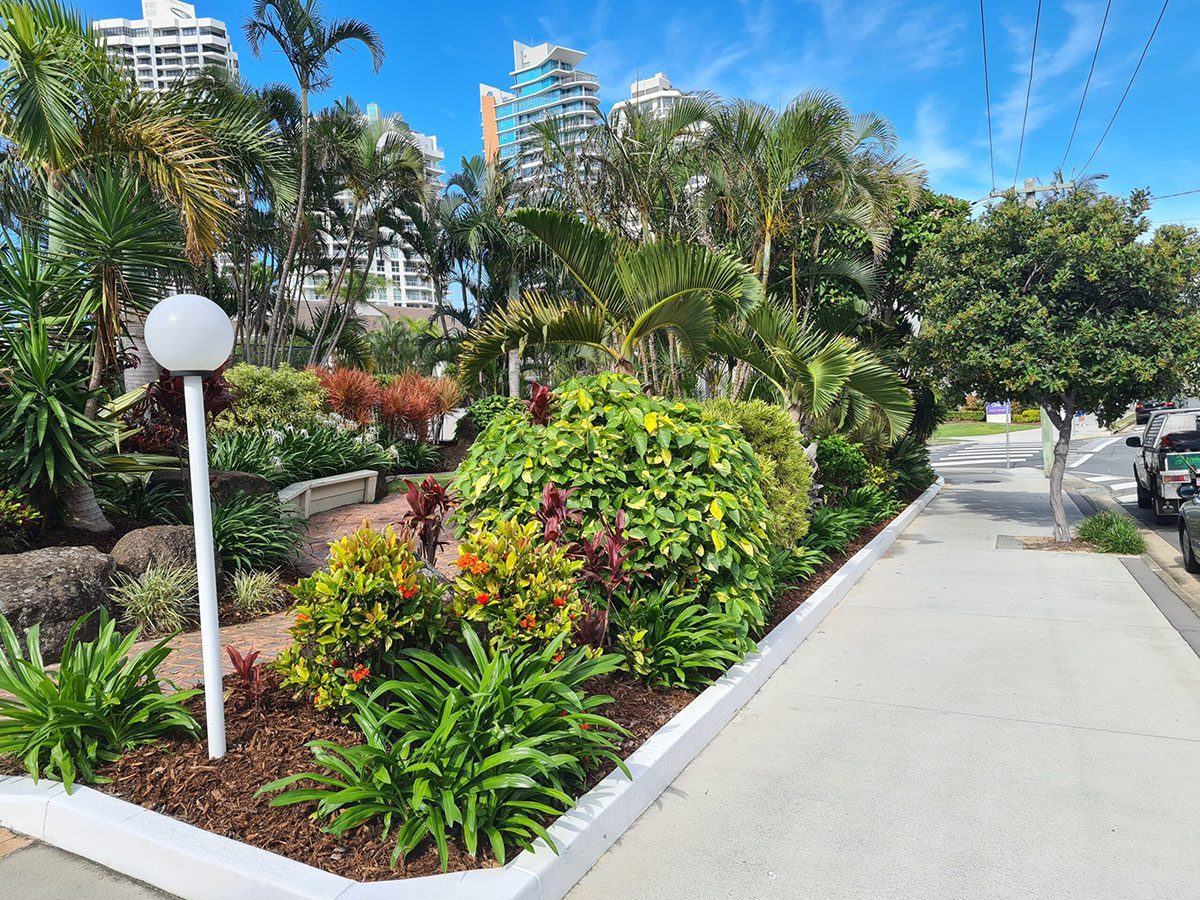
Gold Coast gardens face a tough combination of elements: blazing sun, salt-laden breezes, and heavy downpours. Without protection, our sandy soils lose moisture instantly, leaving plant roots stressed.
A quality mulch layer (applied 50–75 mm deep) performs three critical jobs:
-
Water Retention: It acts as a shield against evaporation.
-
Temperature Control: It insulates the soil, keeping roots cool in summer and warm in winter.
-
Soil Health: As organic mulch breaks down, it feeds earthworms and microbes that naturally aerate the soil.
The 4 Best Mulches for Queensland Gardens
Not all mulch is created equal. At Thrive, we select specific blends based on the aesthetic of the home and the needs of the soil.
1. Cypress Blend (The All-Rounder)
-
Best For: Family homes and native gardens.
-
Why we love it: Cypress is a Thrive favourite. It is naturally termite-resistant (a huge plus in Queensland) and breaks down slowly. Its golden tone looks fantastic in both native and formal settings.
2. Tea Tree Mulch (The Soil Feeder)
-
Best For: Veggie patches and gardens with poor soil.
-
Why we love it: Made from recycled Melaleuca, Tea Tree has excellent water-holding capacity. It breaks down faster than Cypress, which means it pumps valuable organic matter back into the soil more quickly.
3. Rural Fines (The Formal Choice)
-
Best For: Commercial spaces or manicured estates.
-
Why we love it: Also known as forest fines, this has a finer texture that knits tightly to the soil surface. It creates a very uniform, “carpet-like” finish that looks incredible in high-end landscape designs.
4. Recycled Green Waste (The Budget Option)
-
Best For: Large acreage or temporary coverage.
-
Why we love it: This is a sustainable, cost-effective option. It provides good coverage but breaks down very quickly, so it will need topping up more frequently than premium mulches.
The Thrive Method: How to Mulch Correctly
We don’t just dump and spread. Improper mulching is one of the most common causes of plant death we see.
The Golden Rule: Keep it off the collar. When applying mulch, we always leave a small ring of space around the stem or trunk of the plant. Piling mulch directly against the stem causes “collar rot,” which can kill a tree.
The Right Depth: We aim for a consistent depth of 50mm to 75mm. Anything less won’t stop weeds; anything more can prevent water from reaching the soil.
When is the Best Time to Mulch?
In South East Queensland, timing is everything.
-
Late Spring: This locks in moisture before the summer heatwaves hit.
-
Early Autumn: This insulates the soil warmth before winter arrives.
For established gardens, a top-up every 12 to 18 months is usually sufficient to keep the ecosystem healthy.
Ready to Give Your Garden the Thrive Touch?
Mulch is the foundation of plant vitality. Whether you are nurturing a native haven or a formal front yard, the right choice makes all the difference.
From full mulch installations to seasonal refreshes, our team specialises in selecting the perfect blend for your specific microclimate.